
Matthew 13:24-43 (NIVUK)
Sunday 23 July Brent
The parable of the weeds
24 Jesus told them another parable: ‘The kingdom of heaven is like a man who sowed good seed in his field. 25 But while everyone was sleeping, his enemy came and sowed weeds among the wheat, and went away.26 When the wheat sprouted and formed ears, then the weeds also appeared.
27 ‘The owner’s servants came to him and said, “Sir, didn’t you sow good seed in your field? Where then did the weeds come from?”
28 ‘“An enemy did this,” he replied.
‘The servants asked him, “Do you want us to go and pull them up?”
29 ‘“No,” he answered, “because while you are pulling up the weeds, you may uproot the wheat with them. 30 Let both grow together until the harvest. At that time I will tell the harvesters: first collect the weeds and tie them in bundles to be burned; then gather the wheat and bring it into my barn.”’
The parable of the weeds explained
36 Then he left the crowd and went into the house. His disciples came to him and said, ‘Explain to us the parable of the weeds in the field.’
37 He answered, ‘The one who sowed the good seed is the Son of Man.38 The field is the world, and the good seed stands for the people of the kingdom. The weeds are the people of the evil one, 39 and the enemy who sows them is the devil. The harvest is the end of the age, and the harvesters are angels.
40 ‘As the weeds are pulled up and burned in the fire, so it will be at the end of the age. 41 The Son of Man will send out his angels, and they will weed out of his kingdom everything that causes sin and all who do evil.42 They will throw them into the blazing furnace, where there will be weeping and gnashing of teeth. 43 Then the righteous will shine like the sun in the kingdom of their Father. Whoever has ears, let them hear.
Last Sunday we looked at the parable of the sower and soils with its focus on the quality of the soil. We discovered that the seed sown was good- the message of the kingdom. But not all of this seed falls on good soil; some is snatched away immediately, some falls in shallow ground, some among thorns and weeds. But some falls in good soil and produces a good harvest. Today’s parable continues the theme of the kingdom of heaven but this time the focus is on the seed sown.
One thing we need to be careful with when studying the parables is to not read too much into them and to understand them in the way intended. And in the case of the parable of the weeds to follow closely the explanation given. Early Christian theologians were fond of allegorizing the parables. That is, they assigned meaning to every detail given. So, for example, in this parable the detail about the enemy sowing weeds while everyone was sleeping might be taken as a warning about staying awake and alert to the activity of the enemy. The owners servants might be interpreted as the disciples and so on.
But Jesus doesn’t assign special meaning to every detail when he gives his explanation:
The sower= the Son of Man (Jesus)
The field= the world (not the church as sometimes interpreted)
The good seed= people of the kingdom
The weeds= people of the evil one
The enemy= the devil
The harvest= the end of the age
The harvesters= angels
This parable helps us make sense of one of the great troubling realities we all face and one which is often a stumbling block to devotion to God. I’m talking about the problem of evil in the world. You’ve all heard the argument; If God is so loving, just, powerful, why does he allow evil to persist? Why do children die of cancer? Why are women sold into the sex trade? Why do earthquakes shatter lives? Why do the Mugabe’s and Assad’s and Kim jong un’s prevail while the innocent and weak suffer? Why doesn’t God clean up this mess if he’s so great and almighty?
Answer: He will. But not just yet.
And the reason is because there is also a lot of good in this world. The farmer has sown good seed into his field and it is growing to produce a bountiful harvest. And this points to another theme in this parable which helps us make sense of the world; the kingdom of heaven- God’s promised rule and reign on earth comes gradually. Like seed sown in soil it doesn’t spring up overnight but must go through the process of germination, spouting, growth, fruit forming and then harvest. There are no shortcuts to this process.
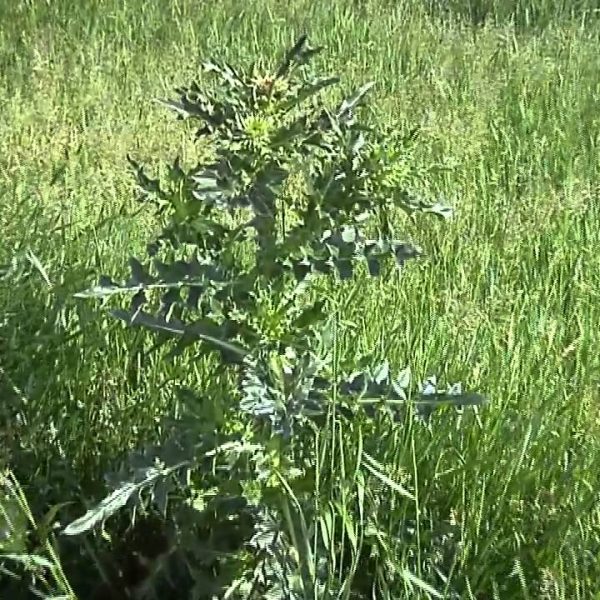
But what to do with evil? The servants in the parable are keen to do some weeding. They want to get in and clean up the mess but as Jesus points out they will only end up pulling the wheat plants up with the weeds, which will affect the good harvest. The weed referred to here is likely to be bearded darnel, common in Israel, which looks a lot like wheat and it wraps its own roots around the roots of the wheat, making it virtually impossible to pull without pulling up the desired plant.
There is a phenomena that gardeners will be aware of called vavilovian mimicry which is where weeds take on similar characteristics of desired plants. For example, Queen Ann lace can look like young carrots in their early stage. Black nightshade can look like potatoes or tomato plants. This is a competitive survival mechanism designed to maximize a plants chances of survival and as we see in the parable is effective. The bearded darnel survives and is allowed to grow alongside the wheat but at harvest time, because it has no use, it is gathered and burned.
Humans also have a kind of vavilovian mimicry and can be very hard to read! Some are very obviously bad to the bone. But even they can be reformed. People can change. Some are obviously saints. But even they can fall. Most are a mixed bag of good and evil; capable of great works and selfish debauchery.
One of my favourite musicals is Les Miserables based on Victor Hugo’s famous 19th century novel. The main character, Jean Valjean is a released convict who in desperation steals some items from a bishop who is providing shelter for him. His nemesis is the fanatical lawman Javert who is convinced that ‘once a convict, always a convict’ and is certain Valjean will inevitably fall from grace. He doesn’t. Instead he goes on to become a factory owner providing work for many and the mayor of his town. He is reformed. But Javert cannot see it. He wants to pull this weed and destroy it. But if he does, he will destroy so much good work. In the musical Javert eventually takes his own life, unable to reconcile the righteous demands of the law which he has always lived by with the mercy and grace that transforms Valjean and which Valjean offers to him.
The temptation Christians have always faced is to play the role of judge. In times past when the Church had more influence in society than it does today this influence was used to execute judgement on those deemed sinners or unworthy or reprobate. But our role, as this parable points out, is not to judge the world- that’s God’s job. There is a place for judgement in the household of God (the church) which is important in maintaining the values and standards of the people of God (eg Matt 18:15-18). But when it comes to the world, that is God’s job and he will do it in his time.
Another insight this parable offers is into the work of the kingdom of God; have you ever wondered why many projects, ministries, endeavours of the church often struggle to get off the ground and get going? It’s because there is an enemy at work who seeks to hamper progress. Ideas die through discouragement or direct opposition. Sometimes things start off with a hiss and a roar but fall apart through conflict and infighting. There is an enemy at work. But we are called to pursue these kingdom endeavours which require patient endurance as we wait for the harvest.
Jesus proclaimed the arrival of the kingdom of heaven. The rule and reign of God on this earth even though his enemy has sown evil in his field.
His kingdom is unstoppable, his harvest is inevitable.
We are invited to participate in his kingdom work. Which begins with a fellowship meal of bread and wine in which we celebrate our Lord who initiates a new covenant with us. In this fellowship meal we are reminded that we are redeemed- no longer weeds but wheat- and we are cleansed by his amazing grace and great love. And through this meal we are commissioned to love and serve our God for his glory.
Amen.
Communion
