
Trinity, College Road. Aug 6.
Brent Richardson
Matthew 14:13-21(NIVUK)
13 When Jesus heard what had happened, he withdrew by boat privately to a solitary place. Hearing of this, the crowds followed him on foot from the towns. 14 When Jesus landed and saw a large crowd, he had compassion on them and healed those who were ill.
15 As evening approached, the disciples came to him and said, ‘This is a remote place, and it’s already getting late. Send the crowds away, so that they can go to the villages and buy themselves some food.’
16 Jesus replied, ‘They do not need to go away. You give them something to eat.’
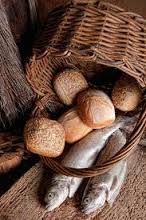
17 ‘We have here only five loaves of bread and two fish,’ they answered.
18 ‘Bring them here to me,’ he said. 19 And he told the people to sit down on the grass. Taking the five loaves and the two fish and looking up to heaven, he gave thanks and broke the loaves. Then he gave them to the disciples, and the disciples gave them to the people. 20 They all ate and were satisfied, and the disciples picked up twelve basketfuls of broken pieces that were left over. 21 The number of those who ate was about five thousand men, besides women and children.
A tale of two kingdoms- Herod and Heaven
(P) Our reading opens with a reference to a previous event: ‘When Jesus heard what had happened’. So, what had happened? The tragic beheading of his cousin and colleague John the Baptist at Herod the tetrarch’s birthday party. You may be familiar with the story; John is imprisoned for speaking against Herod and his illicit relationship with his brother’s wife (her name is Herodias). At his party Herodias’ daughter dances for the guests and Herod is so enamored with her that he promises on oath to give her anything she wants. Prompted by her mother she asks for the head of John to be brought on a silver platter- for their amusement!
This illustrates the sharp contrast between the kingdom of Herod and the kingdom of heaven which Jesus has been teaching through parables. Herod’s kingdom is brutal, murderous. His party is for invited guests only and is for society’s elite. It is lavish, godless and debauch. It runs on the oppression of the masses. It is everything the law and the prophets have denounced over the centuries.
(P) The kingdom of heaven could not be more different from this and the feeding of the 5000 is an object lesson that demonstrates these differences. Jesus has just heard about John’s beheading and naturally he wants to be alone to process his grief and be with God. He may also have been thinking about his own destiny, the cross, and the inevitability of death at the hands of those in power who his very existence threatens.
His solitude is limited to the boat ride across the lake because by the time he arrives a large crowd has got there ahead of him-so much for peace and quiet! I’ve always marveled at the way Jesus handles this which I think is proof of his remarkable character. Most of us would probably turn the boat around and go back. Even the most extroverted of us get ‘peopled out’ sometimes. We need time alone just as we need to not be alone.
But when Jesus sees this crowd he has compassion on them. That’s the first contrast with Herod’s kingdom which is devoid of compassion. Out of this compassion Jesus spends the day healing people. Compassion is a force which brings action. If it doesn’t bring action it is mere pity or sympathy. It’s interesting that Jesus turns his inner grief outwards in the service of others.
There is always a need to grieve and there are healthy ways of doing it. I wouldn’t recommend you ignore grief and just get busy to get over it. But the crowd reminds Jesus that there is a greater purpose and greater perspective to hold onto; there is an alternative kingdom to build and even John’s life and death is not in vain.
Compassion also seems to be motivating the disciples who see a very large practical and logistical problem looming; it’s getting late and the people are getting hungry. Time to wind this up Jesus or we will have people fainting from hunger. But Jesus, unpredictable as ever, turns the problem back onto the disciples;
“They do not need to go away. You give them something to eat”.
Good one Jesus!
I can imagine the stunned look on their faces. This crowd is 5000 men, plus women and children- it could be 20,000 people! This miracle story appears in all 4 gospels (the only one to do so, highlighting its significance). In each case the disciple’s reactions are recorded:(P)
Matthew: “We have here only five loaves of bread and two fish”
Mark: “That would take more than half a year’s wages! Are we to go and spend that much on bread and give it to them to eat?”
Luke: “We have only five loaves of bread and two fish- unless we go and buy food for all this crowd.”
John: “Here is a boy with five small barley loaves and two small fish, but how far will they go among so many?”
‘Bring them to me’ he instructs. Such a tiny amount of food in the face of such great need. By itself these five loaves and two fish would barely satisfy a small family, let alone a crowd of 20,000. But in the hands of Jesus, even the smallest, most insignificant gift, can become a miracle.
A popular 19th century explanation for this miracle was that the people, when seeing the generosity and faith of the boy, brought out their hidden food and began sharing it with their neighbours and so there was plenty to go around. A nice sentiment but it misses the point of the story.
(P) Remember those kingdom parables? Good seed planted in good soil produces a harvest; the mustard seed-small yet producing a bush big enough for birds to nest in; the yeast, hidden in the dough but strong enough to lift it into a loaf. A boy’s lunch can feed a multitude!
Herod’s kingdom is so limited. His party is lavish for sure but tiny compared to Jesus’ party. Herod’s guest’s go home drunk and scarred at the gruesome sight of a head on a plate. Jesus’ guest’s go home satisfied and healed. We can easily miss the significance of the 12 basketfuls leftover which the disciples pick up. Some see links to the number 12- disciples, tribes of Israel. Meaning that Jesus comes to establish the new Israel on a grander scale than ever before.
Eating until we are full is a daily occurrence for us but in those days it was rare to ever have enough to eat that you couldn’t fit in anything else. But on this occasion, they had more than enough! The small things in the hands of Jesus turn into abundance. This is the difference between his kingdom and Herod’s; one is limited, the other is not. Herod can only feed his inner circle; Jesus can feed and sustain as many as would come to him.
It has been pointed out that this event is a key lesson in discipleship. Jesus gives the problem of feeding this multitude to the disciples who are stuck in their thinking at what they can do. They don’t see the potential of what Jesus can do until after this. If that’s a lesson for them, it’s also a lesson for us.
(P) How many times do we come to a problem and try and solve it with our human limitations and forget to include the ‘God factor’? Church finances are a good example of this. The Admin team have been pouring over next year’s budget and no matter how we slice it there is no getting around the fact that we will have to fund a deficit from our reserves. Our income doesn’t match our expenditure.
Of course, we are very fortunate to have the reserves we have which have been built up by previous generations and from the sale of properties. But ideally, we want to keep those for the big-ticket items we need- improving our facilities and funding new mission ventures. We don’t want to run those down maintaining what we have until there is nothing (and no one) left. (Note: actual budget figures will be presented prior to the AGM 1 Oct)
So what do we do? The human answer- the kingdom of Herod approach- is to cut costs and live within our means. Our biggest cost is staff. Two ministers and 1 full time equivalent office position. We could cut that down but that would directly affect our mission and ministry reach and we would soon be in the same place needing to make more cuts.
The kingdom of heaven approach is to put it in Jesus’ hands. To trust the problem to him. To believe that he will grow the income our church needs to carry out its mission. A fair chunk of that income (most of it actually) comes through our weekly offering. Our church wouldn’t run for very long without that.
Many preachers don’t like talking about money (unless they’re prosperity preachers- it’s their favourite subject). But whether we give, how much we give, to what we give is actually very important. Your attitude to giving, especially to the church, speaks volumes about your relationship to God and to your money. If your identity and security is tied up in your financial assets it may be very difficult for you to be generous. You may fear running out or missing out if you become too generous.
But if your identity and security are placed in your relationship to God then you are likely to be free to be generous. You know that God is unlimited even if you are not. You know he can and will supply all you need. You have faith and trust enough to give the small, seemingly insignificant gift to Jesus who can do miracles with it.
So, which kingdom is influencing your thinking the most? Is it Herod’s with its death and lack or Jesus’ with its abundance and harvest?
Only one will send you away satisfied.
